

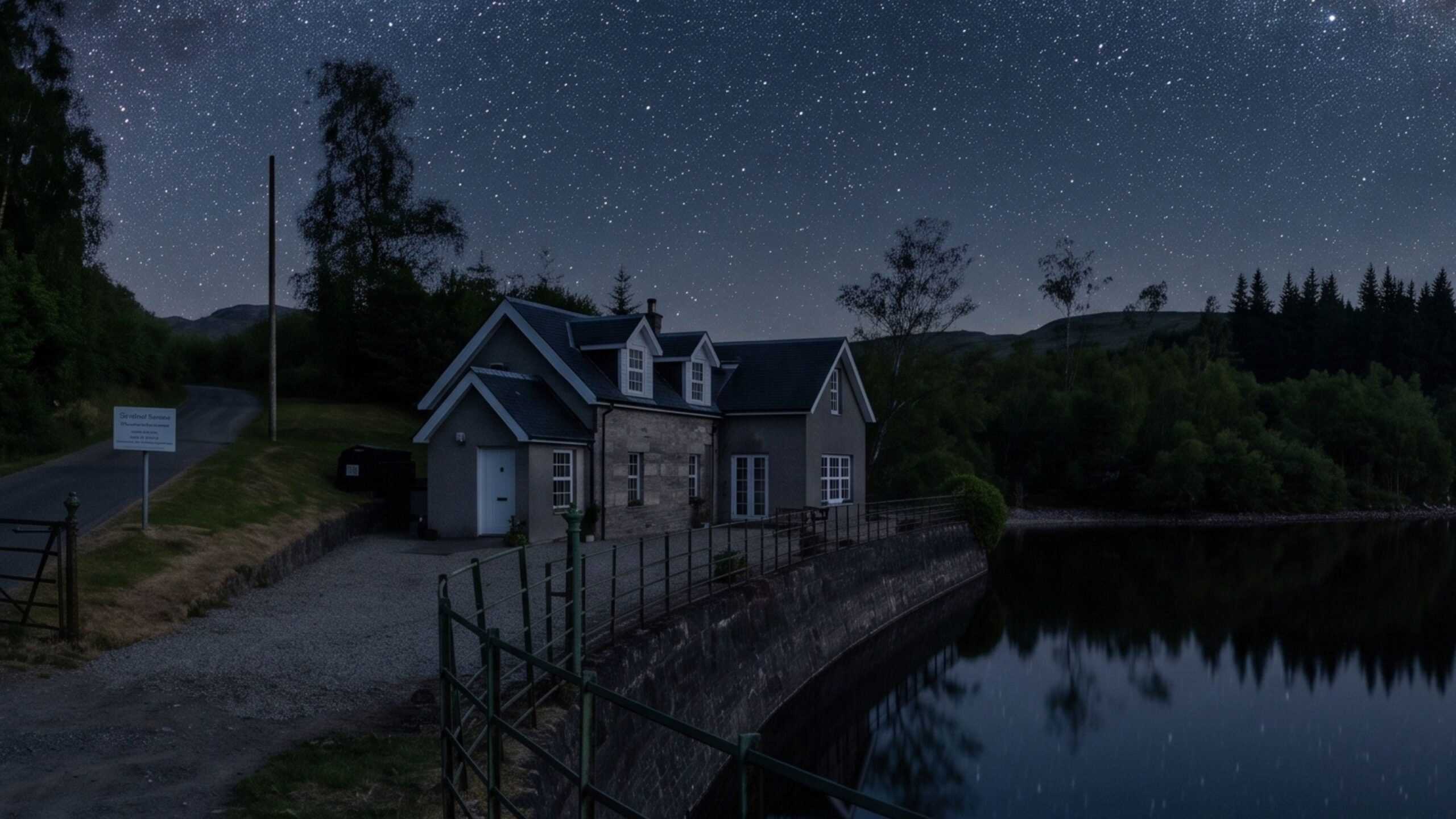
Most guests don’t come here expecting to see the Milky Way. They leave talking about it.
Stronachlachar is at the western end of Loch Katrine, at the quieter edge of Loch Lomond and The Trossachs National Park. There’s nothing to the north except hills, water and the Great Trossachs Forest. When the sun goes down, the darkness is complete in a way most people haven’t experienced before — no orange glow on the horizon, no passing headlights, nothing. Just the sky doing what it actually does when nobody’s diluting it.
Why It’s So Dark Here
Light from towns and cities scatters off the atmosphere and creates the orange glow that most of us consider a normal part of night. It isn’t — it’s light pollution, and it blocks out everything except the brightest stars. Stronachlachar has none of it. The nearest settlement with meaningful street lighting is miles away, and the national park landscape creates a natural buffer around the area.
What this means is that the sky looks fundamentally different. The Milky Way — which sounds dramatic but is just our galaxy seen from the inside — appears as a visible band of light across the whole sky. On a good night in October or November, you can also pick out the Andromeda Galaxy with the naked eye: a faint oval smear to the north-east that is, if you think about it, 2.5 million light years away.
85% of people in the UK have never seen a properly dark sky. This is one.
What You Can Actually See
From late October, Orion is the one to find first — he rises in the south-east and his belt is hard to miss, three stars in a slightly tilted line. Once you’ve found him, the rest of the winter sky starts to make sense. Cassiopeia sits directly overhead most nights through winter. The Pleiades — a smudgy cluster that looks like a miniature Milky Way — are visible from September onwards and sharpen as the nights get longer.
Planets and the Andromeda Galaxy
Jupiter and Saturn are bright enough to track without any equipment. A basic pair of binoculars will show Jupiter’s four largest moons as tiny dots on either side. On a genuinely dark night in the Scottish Highlands, the Andromeda Galaxy is also visible to the naked eye — a faint oval smear to the north-east, 2.5 million light years away. Most people who see it for the first time don’t believe it’s real.
Shooting Stars and Meteor Showers
Worth timing a visit around if you can. The Orionids peak on 20–21 October. The Leonids come in mid-November. The Geminids — December 13–14 — are the most reliable annual shower and can produce over a hundred meteors per hour at peak. Cold, clear winter nights and no light pollution are exactly the conditions they need.
Can You See the Aurora Borealis?
Occasionally, yes. Scotland sits far enough north that strong geomagnetic activity pushes the Northern Lights into view — there have been clear sightings across Stirlingshire in recent years. Solar maximum was around 2025, so activity is declining — but 2026 is still producing some sightings, and the odds of catching something are considerably better than they were five years ago.
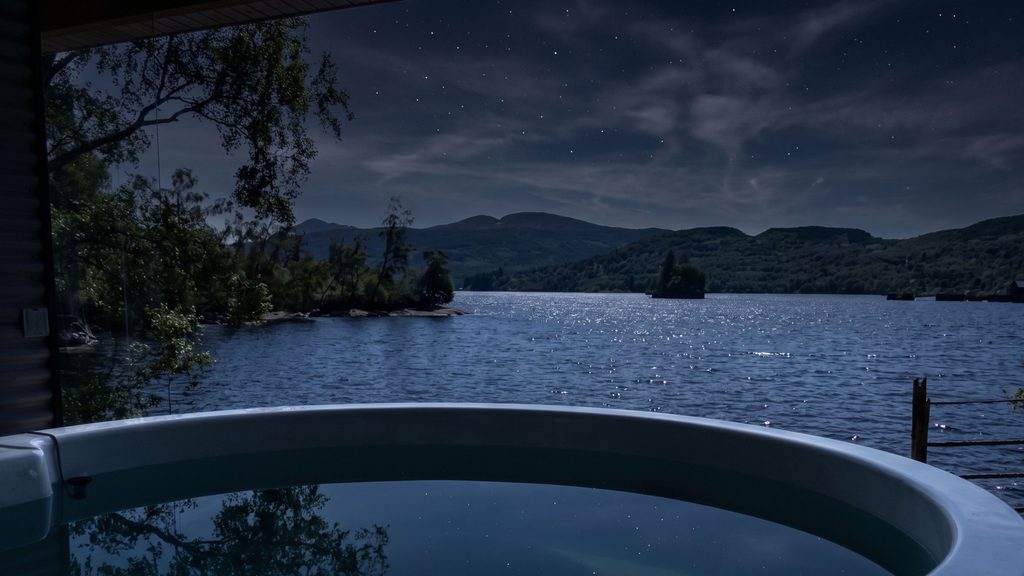
The honest answer is that you can’t plan a trip specifically around it. What you can do is track it. Aurora Watch UK sends free alerts when activity is elevated. If one comes through on a moonless night, look north from the water’s edge at the pier. The loch gives you a clear horizon.
Stargazing Scotland: Dark Sky Parks and Designated Sites
When it comes to stargazing, Scotland has several places with official dark sky status. Galloway Forest Park was designated an International Dark Sky Park in 2009. There are dark sky discovery sites across the Highlands and islands, and the Isle of Rum holds Dark Sky Sanctuary status — one of only a handful in Europe. These are the designated dark sky experiences most guides point you towards, some with scheduled dark sky experiences including telescope sessions and ranger-led nights.
Loch Lomond and The Trossachs National Park doesn’t have an equivalent designation, which is partly just a question of paperwork and proximity to population centres. In terms of actual conditions, the western end of the park — where Old Smiddy sits — is comparable to the best of them. There are no scheduled dark sky experiences or guided telescope sessions here. No coach parties either. You come, you look up, and that is the experience.
The Best Time to Go
October through February. Nights are long, the air is often sharp and clear, and summer’s ambient light is long gone. October has the particular advantage of the Orionids and the Milky Way still visible early in the evening — it’s also when the Trossachs is at its most dramatic in terms of autumn colour, if you want to combine both. Our autumn foliage guide covers the best spots for that.
New moon periods are the ones worth prioritising. A full moon washes out fainter objects almost as effectively as a street lamp.
What Helps
Dark adaptation takes about twenty minutes — your eyes adjust significantly after that, and the sky looks completely different from how it did when you first walked out. A phone screen resets the whole process, so switch yours to red light mode or leave it inside.
Stellarium is the best free app for identifying what’s overhead — point it at any part of the sky and it names everything. A basic star chart works just as well if you’d rather have no screen involved. Binoculars add a lot without adding complexity: craters on the moon, Jupiter’s moons, the Andromeda Galaxy with more structure to it. Stargazing Scotland becomes much easier when you know what your looking at, these apps are great at helping.
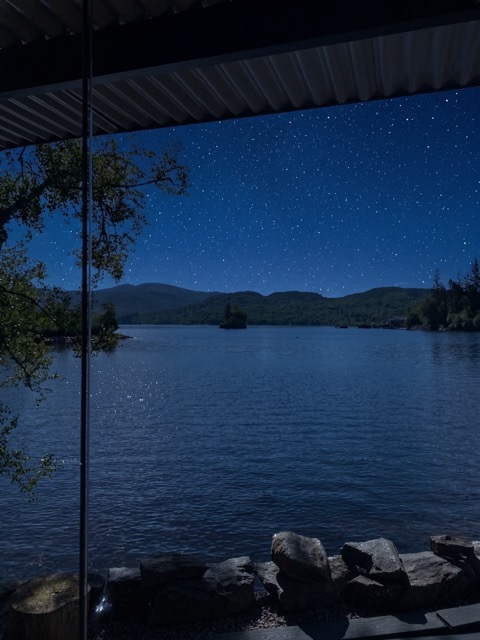
The hot tub keeps the cold manageable on a January night, which means you can actually stay out long enough to see something. That combination — warm water, no light for miles, properly dark starry skies — is the one guests describe most when they come back. Our guide to the wood-fired sauna at Loch Katrine has more on what that side of a stay looks like. And if you’re coming in the colder months, the wild winter landscapes guide for the Trossachs is worth a read before you go.
