

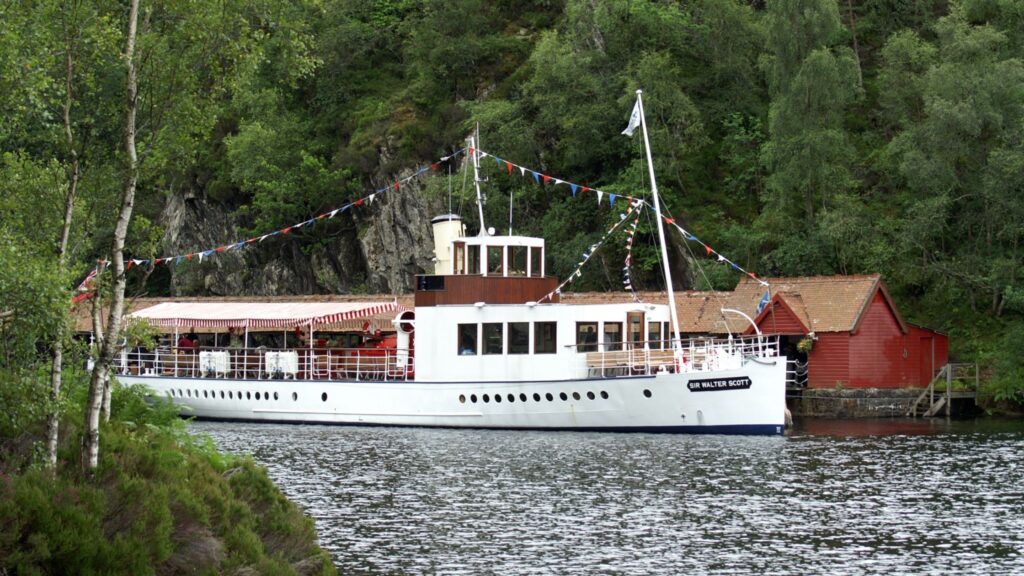
Trossachs Pier gets busy. On a decent summer’s day the car park fills early, the Steamship Sir Walter Scott does a steady trade, and the lochside cycling track sees a fair amount of activity. None of that is a bad thing — it’s a genuinely lovely spot and people are right to make the trip. But the hidden gems Loch Katrine has tucked away beyond the main route are considerably more rewarding than most visitors realise, and the Loch Lomond & The Trossachs National Park surrounding it has a habit of hiding its better moments just slightly off the obvious route.
These are some of the places worth making the effort for. Not undiscovered exactly — nothing around here is truly undiscovered — but quieter, less signposted, and more rewarding for a bit of extra curiosity.
Stronachlachar Pier and the Western Shore
The road to Stronachlachar from Aberfoyle is eleven miles of single track passing Lochs Ard, Chon and Arklet, and it’s one of the more scenic drives in the Scottish Highlands — which is saying something given the competition. Most visitors to Loch Katrine arrive at the eastern end and don’t come this far west, which is their loss.
Stronachlachar itself is small and quiet in the way that genuinely remote places are. The Steamship Sir Walter Scott calls in at the pier on its longer cruises, and on those days there’s a brief flurry of activity. The rest of the time it’s calm, unhurried, and feels considerably further from Glasgow than the forty-odd miles it actually is. The views west from the shore here are longer and less interrupted than anything you’ll get at the busier eastern end — and if you’ve hired a bike at Trossachs Pier, the Trossachs Trail brings you all the way out here along the southern shore.
Glengyle: Rob Roy’s Birthplace
A short walk north from Stronachlachar brings you to Glengyle, the birthplace of Rob Roy MacGregor. There’s no visitor centre, no signage clamouring for your attention, and no entry fee. Just a farm, a cluster of old buildings, and a burial ground containing several members of the MacGregor clan.
For a place so tied to one of Scotland’s most famous figures, Glengyle is remarkably unassuming. Rob Roy MacGregor was born here in 1671, and his story — outlaw, cattle drover, folk hero — has since inspired Scott’s poem, a Rossini opera, and more films than it probably deserved. The Lady of the Lake draws heavily on the legends of this glen, and it was Scott’s writing that first brought Victorian tourists up here in numbers. Standing in the actual place, away from all of that noise, it’s easier to understand what he saw in the landscape.
The Rhoderick Dhu Footpath
The Rhoderick Dhu footpath takes its name from another character in Scott’s poem, and it runs along the northern shore of the loch — the quieter side, away from the main cycling track. It sees a fraction of the foot traffic that the southern route gets, partly because it’s less obvious and partly because the surface is rougher. Proper walking boots are worth it rather than trainers.
What you get is a stretch of the Great Trossachs Forest that feels genuinely undisturbed. The loch is visible through the trees for much of the walk, and the further west you go the less likely you are to pass anyone coming the other way. If you’ve done the southern shore before and want to see the loch differently, this is the better option.
Factors Island
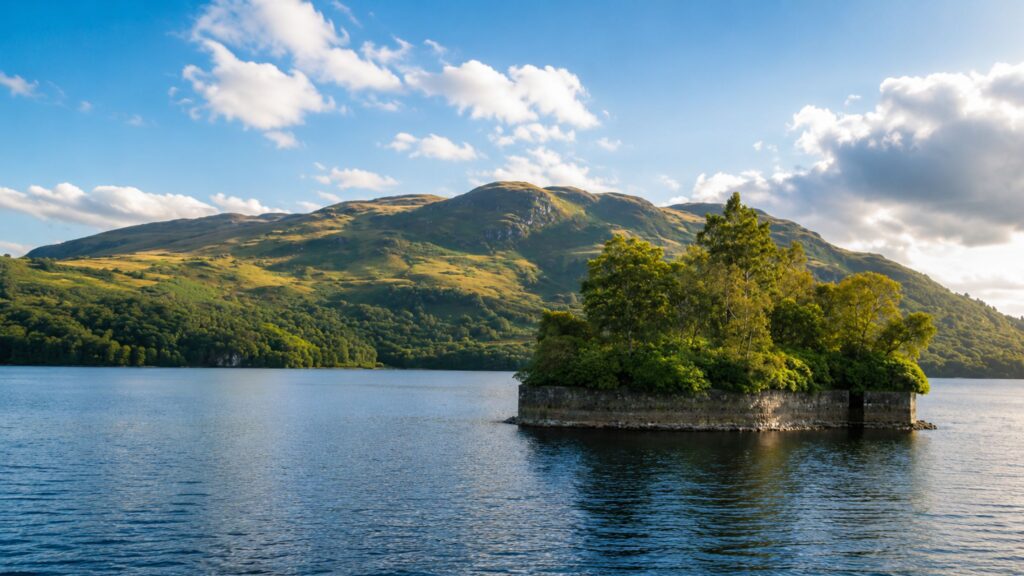
Loch Katrine contains a small island that most visitors sail straight past without knowing what it is. Factors Island — named after the land agent, or factor, who once lived there — sits close to the southern shore and is easily overlooked from the main path. It has a modest ruin on it and a history tied to the management of the Glengyle estate.
It’s not somewhere you can visit directly, and there’s no dramatic viewpoint built around it. But knowing it’s there, and what it represents about how this land was managed and contested over the centuries, adds a layer to the loch that the scenery alone doesn’t give you. Look for it on a clear day when you’re walking the southern shore — it’s smaller than you’d expect.
The Royal Cottage
The Royal Cottage is easy to walk straight past. It sits back from the path in the trees on the southern shore, a Victorian Gothic building that looks slightly out of place in the forest — which is precisely what makes it worth stopping for. Queen Victoria came to Loch Katrine in 1859 to open the new aqueduct that would carry fresh water from the loch to Glasgow, and the cottage was built as part of the arrangements for her visit.
It’s privately managed now and not accessible to the public, but you can see it clearly enough from the path. The stonework is ornate in a way that feels almost theatrical given the setting — this very deliberate piece of Victorian architecture dropped into the middle of the Trossachs woodland. It’s a good spot to pause and think about the layers of history this loch carries, beyond the scenery.
Loch Achray
Loch Achray sits just east of Loch Katrine on the road in from Callander, and most people drive past it without a second glance. It’s smaller, less famous, and doesn’t have a steamship or a bike hire centre to give people a reason to stop. On a still morning, though, it’s one of the more beautiful spots in the national park — the kind of place that stops you if you happen to be paying attention.
The Ben A’an car park is just off the northern shore. Even if a hill walk isn’t on the agenda, it’s worth pulling over and walking down to the water. The loch sees almost none of the visitor numbers that Loch Katrine draws, and there’s a short route around part of the shoreline that takes no real effort and delivers a disproportionately good view of the surrounding Trossachs hills.
Ben A’an
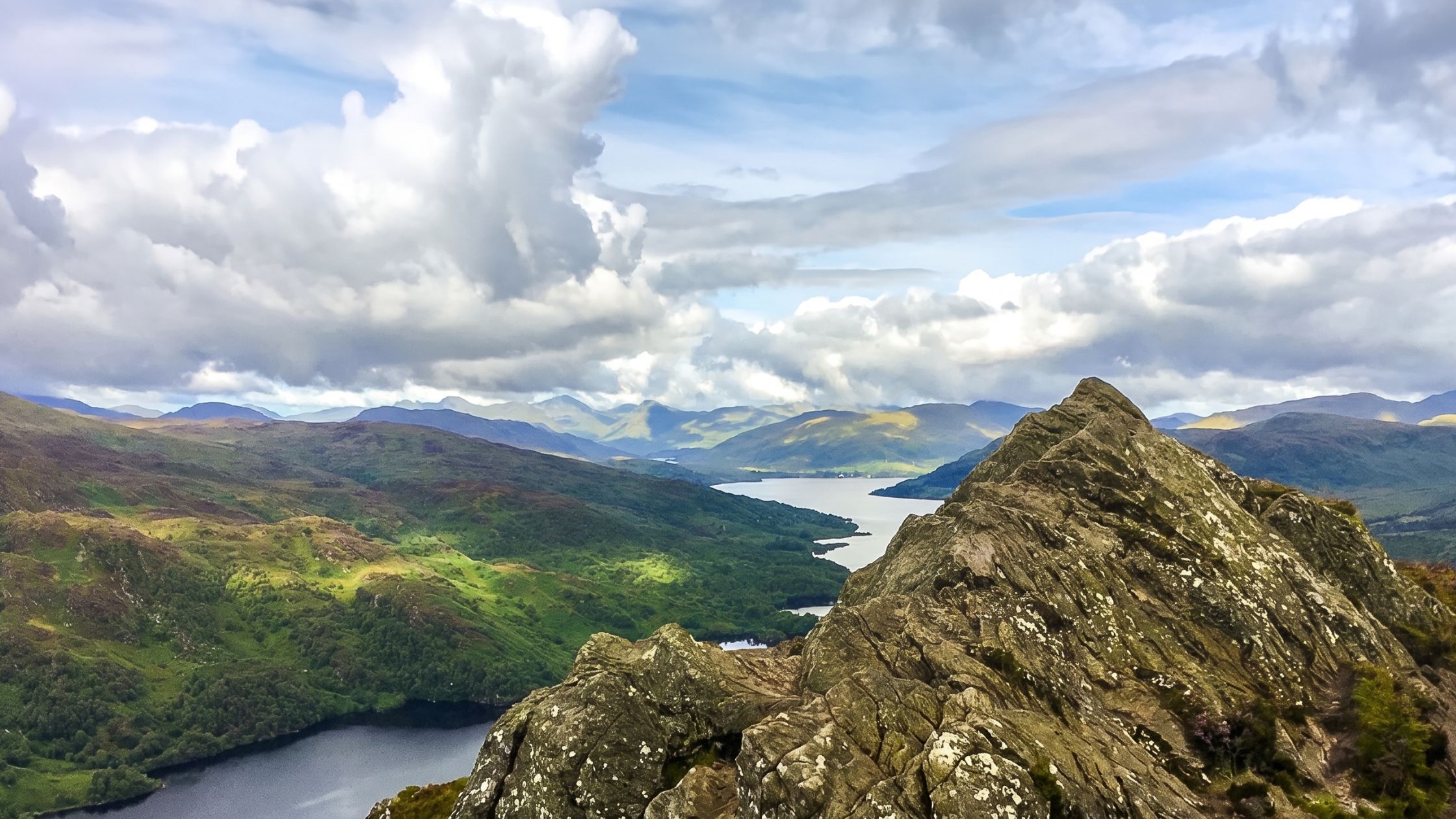
Ben A’an gets called the mountain in miniature, and it’s an accurate description. At 461 metres it doesn’t trouble the big Highland summits, but the path goes straight up rather than winding around, which means your legs know about it. The views from the top are genuinely worth the effort — Loch Katrine laid out to the west, Ben Lomond visible to the south, and on a clear day the Arrochar Alps beyond.
Allow an hour and a half up from the car park, maybe a little more if you take your time. Weekend mornings in summer it gets busy, but it’s a different hill on a Tuesday. For anyone staying in the area who wants a proper half-day walk without committing to a full mountain day, Ben A’an and Ben Venue nearby are the two most satisfying options close to the loch.
The Victorian Aqueduct Infrastructure
Loch Katrine hasn’t just been a beauty spot — it’s been Glasgow’s main water supply since 1859, when a remarkable feat of Victorian engineering brought fresh water from the loch to the city through a system of aqueducts, tunnels and pipes stretching over twenty-six miles. Much of that infrastructure is still in use today.
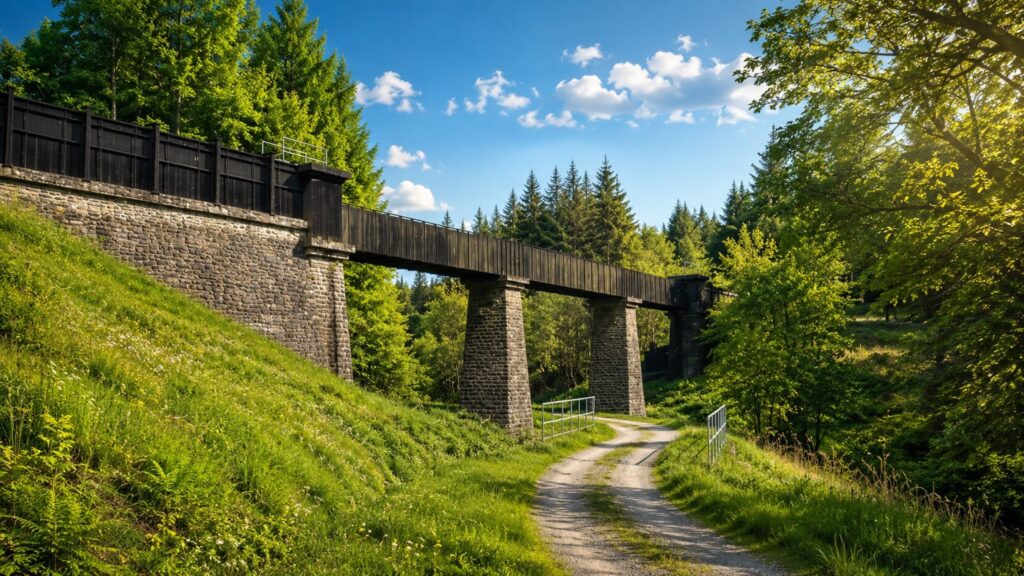
You won’t find much interpretation of this on site, which is partly what makes it interesting to look for. The valve houses, the overflow structures and the aqueduct routes are woven into the landscape in ways that most visitors don’t notice. The Loch Katrine aqueduct is one of the largest and longest-running public water engineering projects in British history, and it sits quietly in the background of a place people visit for the scenery — which seems entirely fitting for this part of Scotland.
After a day spent exploring these quieter corners of Loch Katrine, there’s something rather satisfying about returning to your own base rather than joining the queue back down the glen. That’s one of the reasons why we fell in love with this part of the Trossachs, and why Old Smiddy Cottage made sense as a place to share — it puts you close enough to all of this to explore at your own pace, without the rush of fitting everything into a day trip. If you’d like to know more about staying at the cottage, the booking and enquiries page is the best place to start.
